How to post an effective book listing on Etsy

While it may seem simple, posting an effective listing on Etsy requires a lot of thought and effort. However, there are a few steps you can take to streamline the process and make sure that your post imparts the optimal impression on the maximum amount of potential customers. Today, I will be teaching you a few tricks of the trade that I’ve picked up in my years of selling vintage books on the site.

  • Take at least five high quality images. It is extremely important to have an attractive, robust photo gallery for every listing. The cover photo for each listing takes up the majority of space on your site, so you must create a uniform, aesthetically-pleasing style that imparts legitimacy to your brand. This is particularly important as there are no customizable templates on Etsy – this is your best opportunity to make a unique first impression on potential customers. While it is good to be creative here, you must also make sure to show as much of your product as possible. I’ve found that, when it comes to books, the most efficient way to do this is to post pictures of the following, in order – the front of the book, the back of the book, the side of the book, the book sans dust jacket, the dust jacket, and the copyright page. This gives the customer all the information they need about the condition of the book in as few steps as possible. I’ve included an example from my shop. While I prefer a simple, straightforward approach to my photo galleries, there are a ton of shops with more creativity that are equally effective.
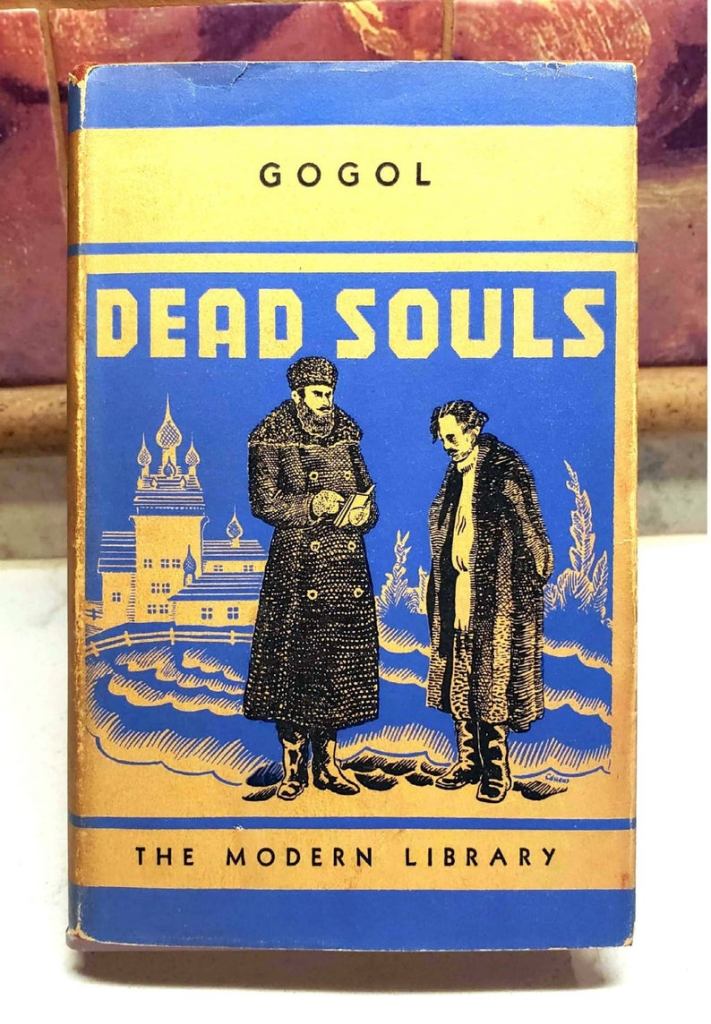
  • Take full advantage of your tags. On Etsy, you are allowed to give each of your posts up to 13 tags. These are keywords that will direct customers to the listing when they search for them. It is vital that you use the maximum 13 tags on every listing. Along with broad keywords such as “book” and “vintage book,” I find it beneficial to use similar writers and works as well. For example, if I’m selling a book by Ernest Hemingway, I will tag the listing with writers such as George Orwell and John Steinbeck, because it is likely that those interested in those two writers would be interested in Hemingway too.
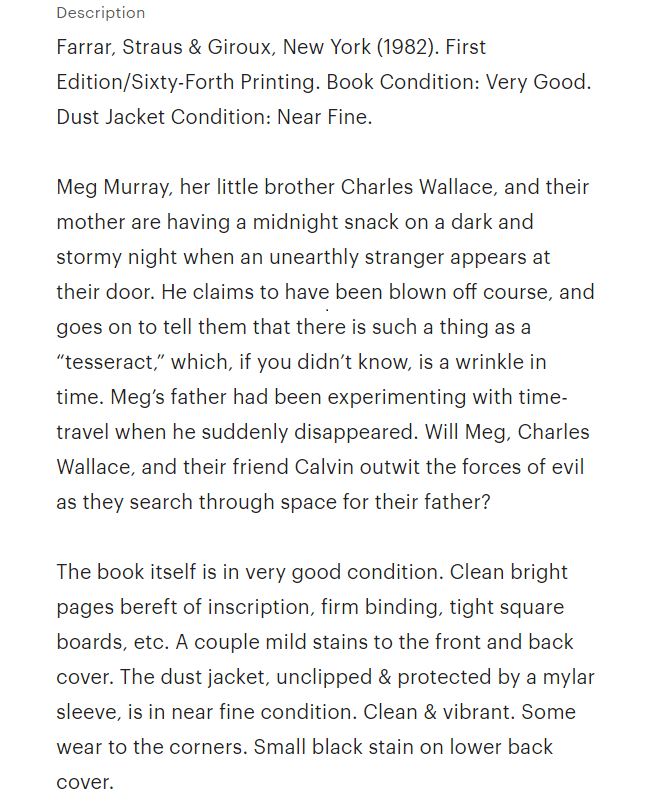
  • Describe the book in great detail. It is best to describe the condition of the book in as much detail as possible, warts and all. If there is a flaw with the book, such as a tear in the dust jacket or underlining on the pages, include it in the description. Otherwise you risk having the book returned and/or receiving a negative review on your shop. I recommend adding a brief description of the general plot as well. Longer listing descriptions make your shop look more professional, and can ultimately lead to higher sales. For an example, I’ve included a screenshot of my description for Madeleine L’Engle’s “A Wrinkle in Time,” which I’m currently selling on my site.
  • Utilize social media. After finishing a listing, I always share it on relevant Pinterest groups. There is a wide variety of Pinterest groups dedicated to vintage books. About 25% of my monthly site visits arrive via this route. I also highly recommend that you make an Instagram account dedicated to your shop. I post the cover photo of each new book on Instagram, then include a link to the listing in the description. I only started doing this about 6 months ago, but noticed an uptick in sales almost immediately.

My Story

Blotto Von Sozzle Books just turned five years old. I launched the business in the summer of 2014, for the purpose of putting my love and knowledge of literature to practical use. The shop specializes in vintage hardcovers in their original dust jackets. I offer customers attractive, scarce copies of well-known works at an affordable price. While my inventory is relatively small, clocking in at just about 200 books, I make sure that every genre is fairly represented, from literary fiction to poetry, plays, art, and children’s books – even a few vintage magazines.

In pursuing a web design certificate at Wake Tech University, I hope to gain the skills necessary to design an effective website for Blotto Von Sozzle Books. Currently, I have storefronts on Etsy, Ebay, and Abebooks. There are certainly benefits to hosting a business on these services. The customers are basically brought to you through the site’s search engine, for one – it’s like having a booth at a hugely popular market. You must pay for the privilege, however, in the form of an avalanche of fees. A good 20% of potential profits disappear on every sale. Now that I have made a name for myself in the online bookselling world, I think it’s time to start transitioning my business to it’s own personal website.

Eventually I would like to have a physical storefront, too. My dream is to have a tiny, quaint bookshop in Asheville, North Carolina. I will serve tea, host book readings, and offer a comfy reading nook, while the shop’s interior design would feature a plethora of vintage Polish film posters (another interest of mine), which will be up for sale as well.

The Revival of Independent Bookstores

Until the last few years, I sometimes doubted my dream of owning a small bookstore. The book business seemed to be on the downturn, and much has been made of digital books replacing physical ones entirely. Thankfully, as the New York Times goes into, small, independent bookstores are currently undergoing a major revival. There are several reasons for this trend, but the main one, according to the article, is that these small bookstores are viewed as “anchors of authenticity” in people’s communities, a “part of the local fabric.” Successful bookstores achieve this by offering more than simply books – they offer book readings, author meet-ups, open-mic nights, and fresh-brewed coffee, as well as comfy spaces to peruse their selection.

Asheville is the perfect place for such a location. There are a few used bookshops there already, of course, including the excellent “Battery Park Book Exchange” which, in line with the article, offers a champagne bar. But there is still room for more in this art-oriented town – “sales at independent bookstores rose nearly 5% in 2018.” I plan to offer tea and coffee to my customers, and set up regular book readings at the small location. My unique name could even lend itself to a reasonable amount of merchandise sales, like t-shirts and mugs. Due to thin profit margins on the books themselves, the modern successful bookstore makes a sizable amount of their money through things like this.  

Introduce Yourself (Example Post)

This is an example post, originally published as part of Blogging University. Enroll in one of our ten programs, and start your blog right.

You’re going to publish a post today. Don’t worry about how your blog looks. Don’t worry if you haven’t given it a name yet, or you’re feeling overwhelmed. Just click the “New Post” button, and tell us why you’re here.

Why do this?

  • Because it gives new readers context. What are you about? Why should they read your blog?
  • Because it will help you focus you own ideas about your blog and what you’d like to do with it.

The post can be short or long, a personal intro to your life or a bloggy mission statement, a manifesto for the future or a simple outline of your the types of things you hope to publish.

To help you get started, here are a few questions:

  • Why are you blogging publicly, rather than keeping a personal journal?
  • What topics do you think you’ll write about?
  • Who would you love to connect with via your blog?
  • If you blog successfully throughout the next year, what would you hope to have accomplished?

You’re not locked into any of this; one of the wonderful things about blogs is how they constantly evolve as we learn, grow, and interact with one another — but it’s good to know where and why you started, and articulating your goals may just give you a few other post ideas.

Can’t think how to get started? Just write the first thing that pops into your head. Anne Lamott, author of a book on writing we love, says that you need to give yourself permission to write a “crappy first draft”. Anne makes a great point — just start writing, and worry about editing it later.

When you’re ready to publish, give your post three to five tags that describe your blog’s focus — writing, photography, fiction, parenting, food, cars, movies, sports, whatever. These tags will help others who care about your topics find you in the Reader. Make sure one of the tags is “zerotohero,” so other new bloggers can find you, too.

Design a site like this with WordPress.com
Get started